|
Guidelines for Treatment of Prolonged Seizures in Children and Adults |
Photos courtesy Nashville Fire Department
Guidelines for Treatment of Prolonged Seizures in Children and Adults
Mon, Apr 10, 2017
By
Credits by JEMS
Related in the link
Mon, Apr 10, 2017
By Saber un poco más de epilepsia. Crisis Convulsivas / EMS Epilepsy and Seizure Management TRAINER’S GUIDE. PDF by Epilepsy Foundation
Post by Dr. Ramon Reyes, MD FROM JEMS
An actively seizing patient is a relatively common prehospital emergency, and all EMS providers need to be expert at caring for patients with seizures. Although most seizures stop spontaneously, it's essential to have a well-planned strategy when a patient with active seizures is encountered.
The American Epilepsy Society has recently released its evidence-based guidelines for the treatment of actively seizing children and adults, and this article incorporates its treatment recommendations.
Many terms are used to describe seizure duration. In general, "brief seizures" are self-limited seizures which last less than five minutes and prolonged seizures are those that don't self-terminate and continue for longer than five minutes.1
Status epilepticus is defined in the neurologic literature as continued seizure activity lasting longer than 30 minutes, or two or more seizures without the patient regaining normal consciousness over a 30-minute period.1
Because prolonged seizures lasting more than five minutes are referred to as status seizures by most non-neurologist providers including EMS personnel, and are also likely not to self-terminate without medical intervention, recent guidelines do not differentiate between status epilepticus and seizures lasting more than five minutes.
Practically speaking, providers can assume a patient is in status epilepticus when a patient is still seizing from the time 9-1-1 is called until EMS arrives on scene, as this time duration is typically at least five minutes.2
Actively Seizing
When an EMS provider encounters an actively seizing patient, expert preplanned care is essential. We divide seizure care into five steps. These steps are:
1. Initial stabilization;
2. Administration of benzodiazepines;
3. Consideration of the underlying etiology;
4. Advanced anti-seizure medication, and though rarely required;
5. Deep central nervous system (CNS) sedation.
In general, only the first three steps will be performed by EMS.
Step 1: Stabilization
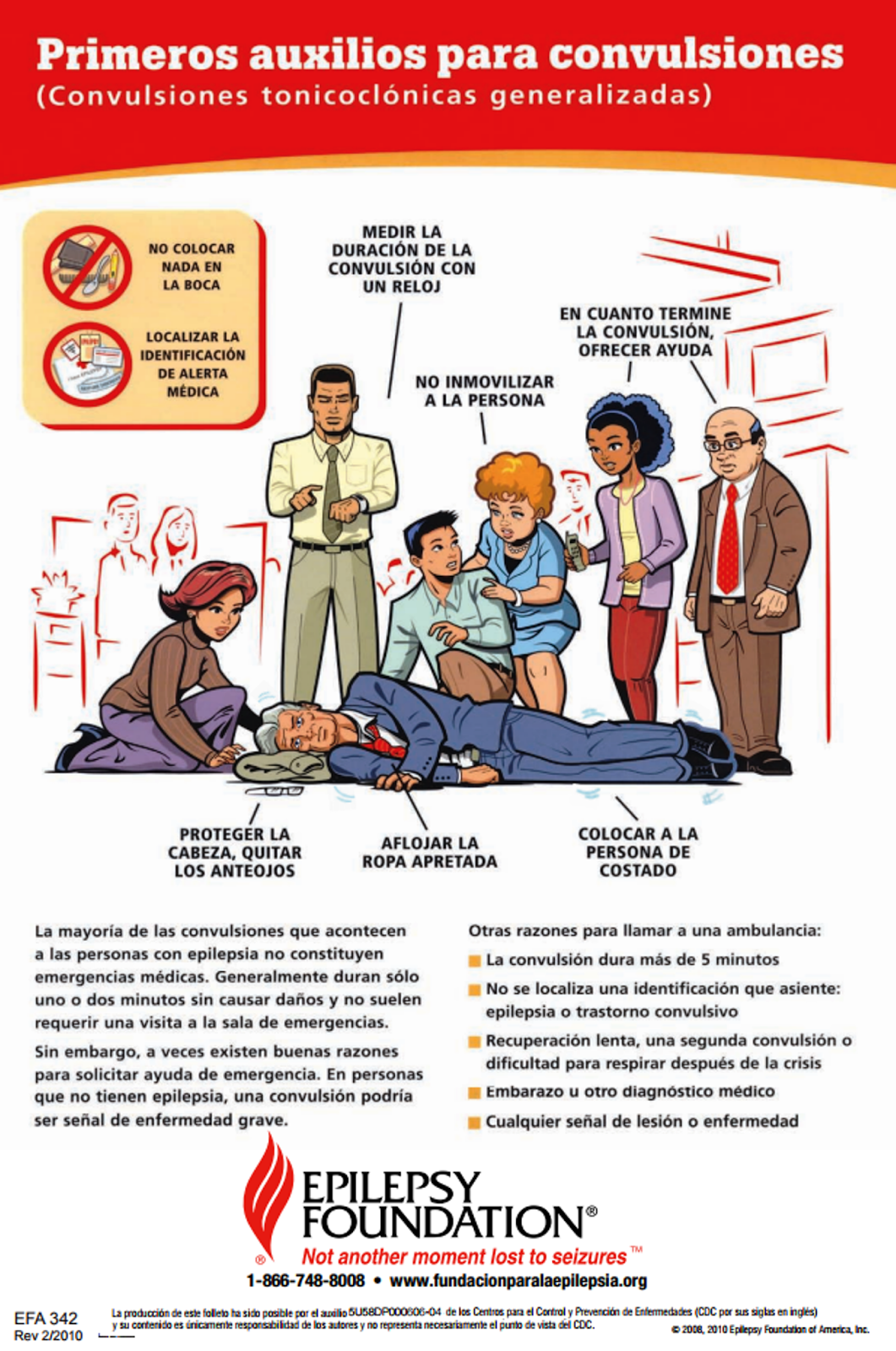
This initial step is routinely done as soon as prehospital personnel arrive on scene. (See Table 1.) The patient should be turned on his or her side to avoid airway obstruction by the tongue and a perfusing pulse felt for.

If the seizure is post-trauma or fall, the cervical spine can be secured with a chin lift and jaw thrust until a C-collar can be applied and the patient carefully turned. This applies to all patients found at the bottom of stairs or whenever a fall from height is suspected.
Patients should be protected from harm by keeping them from sharp objects and possibly falling off an unsafe surface. Oxygen should be applied while the patient's respiratory status is monitored.
Nasopharyngeal airways are often useful airway adjuncts, but objects should never be placed in a patient's mouth while the patient is actively seizing.
Finally, a finger stick glucose analysis should be performed in every actively seizing patient. Hypoglycemic patients should be immediately treated with IV glucose. It can't be stressed enough that glucose should be rapidly assessed in every seizing and postictal patient, regardless of how many times the patient has been seen in the past.
How long before beginning definitive anti-seizure therapy? How long a patient should be allowed to continue to seize has dramatically decreased over the past few decades. Many years ago, it was thought that definitive seizure management could be slowly provided over about an hour. However, based on newer imaging techniques, prolonged seizures can have very deleterious (CNS) effects.
After five minutes of seizing, changes in membrane receptors are already occurring at the cellular level, and by 30 minutes, irreparable brain damage may occur. Furthermore, seizures cause profound physiologic derangements.
Patients have altered perfusion of their brains and bodies; can become hypoxic, hyperthermic, hypertensive or hypotensive; are often very hypercarbic; and usually develop a lactic acidosis. These abnormalities quickly correct, and there should be no long-term sequelae if the seizure is rapidly terminated.3-5
In general, most seizures stop within a few minutes and self-terminate within two to three minutes of onset.2Thus, providing the supportive care outlined in step 1 of this seizure protocol usually results in the safe care of a patient who will spontaneously stop the seizure, have a brief postictal period and awaken in a somewhat confused state.
Once the patient is awake and stable, a history of the event from the patient and bystander should be obtained. Prodromal symptoms, any trauma, severe headache, visual changes, history of prior seizures and medication compliance should be obtained if possible. If seizure medications are present, they should carefully be secured and brought to the ED with the patient.
Because a syncopal event with myoclonic jerking due to cerebral hypoperfusion may be confused with a seizure, a history from both the patient and bystanders is essential, especially with new onset seizures. Syncopal patients, particularly older patients, usually have no prodrome and wake to a totally alert state rather than appearing confused in a postictal state.
Vasovagal syncope, a very common cause of loss of consciousness in patients under the ages of 30-40, usually has prodromol symptoms such as lightheadedness, hyperventilation, diaphoresis, nausea and is often caused by a specific precipitant event like pain or fear.
Patients experiencing blunt head trauma may also have brief extremity stiffening, usually extensor posturing, which may be confused with seizure activity. These concussive convulsions are not typically followed by a postictal period and do not necessarily represent structural brain injury.6
The physical exam can be helpful to distinguish true seizure from other causes of loss of consciousness with convulsions. Specifically, lateral tongue biting and urinary incontinence is more suggestive of an actual seizure than a syncopal event.

 |
| Following stabilization and transport to an ED, seizure patients will require a careful history and a detailed review of prior medical records, as well as in-ED testing including at minimum, basic blood work and toxicological testing. |
Step 2: Benzodiazepine Therapy
Once initial stabilization of the patient occurs, benzodiazepines should be administered as first-line therapy. The effectiveness of therapy decreases as seizure duration increases, making status epilepticus harder to terminate. This underscores the importance of treating status epilepticus as soon as possible.7
Which benzodiazepine should be used? Benzodiazepines are very effective in terminating most tonic-clonic seizures and will usually stop 50-90% of seizures. Three of the most commonly used benzodiazepines are diazepam, lorazepam and midazolam. There are, however, very specific pharmacologic differences in these three class-related medications.
Diazepam is fat-soluble and erratically absorbed when given intramuscularly (IM). For that reason, it should only be given IV or per rectum (PR).
Lorazepam is water-soluble and can be given IV or IM but is heat labile and will lose potency over 30-60 days if not refrigerated.
Midazolam can be given IV, IM or intranasally (IN) and is not heat labile so it has a long shelf life, even if in a hot or unrefrigerated location for prolonged times.
Of these medications, each has a different effective anti-seizure half-life once administered. Midazolam has an elimination half-life of 90-150 minutes. Although lorazepam can be measured in the blood for 12-24 hours, its. usual anti-seizure effect is only a few hours. Finally, diazepam has a very long half-life of up to 48 hours but is highly lipid-soluble and therefore has an anti-seizure effectiveness of only 20-30 minutes.1,5,8
There are many studies comparing the effectiveness of the benzodiazepines. In general, all three are very similar in stopping seizures when given IV at comparable doses, though some studies do show subtle differences among them. Although there's some debate as to whether diazepam or lorazepam is "safer or better" with regard to causing less respiratory depression, neither is definitively proven to be significantly better than the other.
Providers should become expert in using one or two of the benzodiazepines and learn how to use these agents safely and effectively via at least two routes. Because midazolam is heat stable and can be administered IV, IM and IN, it's favored by many systems as the benzodiazepine of choice.
The RAMPART (Rapid Anticonvulsant Medication Prior to Arrival Trial) is a very important practice-changing study that compared IV lorazepam vs. IM midazolam and showed a difference between the efficacy and time of onset for effective seizure control. This was a double-blinded prehospital study that randomized seizing children
(> 13 kg) and adults to either IV lorazepam (4 mg in adults/children> 40 kg and 2 mg in children < 40 kg) or to IM midazolam (10 mg in adults/children > 40 kg and 5 mg in children < 40 kg).9
(> 13 kg) and adults to either IV lorazepam (4 mg in adults/children> 40 kg and 2 mg in children < 40 kg) or to IM midazolam (10 mg in adults/children > 40 kg and 5 mg in children < 40 kg).9
The study showed that midazolam terminated 73% of seizures vs. 63% of those treated with lorazepam, a statistically significant difference. Additionally, although IV lorazepam was quicker to stop seizures and worked on average in 1.6 minutes, it took an additional 4.8 minutes to start the IV line.9
Although IM midazolam took 3.3 minutes to work once administered, it took only 1.2 minutes to administer IM for a total time to seizure cessation of less than five minutes. Therefore, IM midazolam had a shorter overall time to seizure cessation than IV lorazepam.9 Thus, currently IM midazolam should be the preferred route over IV in patients who don't have an IV line already established.
If the patient continues to seize, a second dose of the benzodiazepine should be given three to five minutes after the initial dose, but not any sooner, as each takes minutes to work.
Are there alternative routes to IV and IM administration? The IN route has emerged in popularity, particularly in pediatric patients. Midazolam is the preferred IN medication and is very similar to IM administration in onset and efficacy. Midazolam is water-soluble and is rapidly absorbed across the nasal mucous membranes.
Midazolam comes in two dilutions: 1 mg in 1 cc and 5 mgs in 1 cc.1,10 Most EMS units and EDs commonly stock only the 1 mg in 1 cc dilution; 1 cc per nasal is considered the maximal dosing, and most IN studies have centered on pediatric administration. The typical IN dose is 0.2 mg/kg, up to 10 mg.10
An inexpensive atomizer device connected to a standard syringe can aid in administration. Several studies have demonstrated IN midazolam as being more rapid to administer than IV diazepam but with longer time to cessation of seizure when measured from time of drug administration.
However, when time needed to establish IV access was included, time to control seizures was shorter using IN midazolam. Several studies have also compared the efficacy of IN midazolam to PR diazepam. Most favor intranasal midazolam due to its shorter time to seizure cessation.1,10
At least one prehospital study specifically compared IN midazolam and PR diazepam administration by paramedics. The median seizure duration was statistically shorter for the IN group compared to the PR group.1,10,11
Other routes for effective termination of seizures include PR diazepam and buccal midazolam. PR diazepam has been shown to effectively stop seizures in children and is commonly administered in the form of a gel through a prefilled syringe to children by their parents before EMS personnel arrive.
The usual dose is 0.5 mg/kg. Buccal midazolam also has demonstrated effectiveness in seizure cessation in children and was more effective than PR diazepam in several pediatric studies.1
Typical dosing is 0.2-0.5 mg/kg. When non-IV routes are compared, the most recent guidelines from the American Epilepsy Society conclude that non-IV routes of midazolam are probably more effective than diazepam in children.1
What adverse effects should I watch for? The primary adverse effect of benzodiazepines is respiratory depression, which is more common with repeated dosing. Some patients may require bag-valve mask and, rarely, may need advanced airway management. Endotracheal intubation should only be attempted in those seizure patients who have prolonged respiratory depression or a respiratory arrest.
Step 3: Underlying Etiology
Although there are many potential causes of seizures, we find it easiest to divide the causes into five general categories: vital sign abnormalities, toxic metabolic causes, structural causes, infectious etiologies, and those due to an underlying seizure focus-epilepsy.
Although idiopathic epilepsy is the most common reason of an EMS call for a seizing patient, it should only be considered as the cause of the patient's seizure after all other causes have been considered and vital sign abnormalities and hypoglycemia have been ruled out.
This is especially true in specific situations such as a child under the age of six where febrile seizures are common or in diabetics who are obviously predisposed to hypoglycemic seizures.
Pregnant patients should be assumed to have eclampsia which requires treatment with magnesium. The prehospital environment is often suboptimal to determine the underlying etiology of a new seizure.
Table 2 lists the most common causes of seizures to be considered during the in-ED evaluation.12 Many patients will require a careful history, a detailed review of prior medical records, and in-ED testing including basic blood work and toxicological testing, along with considering whether the patient requires CT or magnetic resonance imaging scanning.

Steps 4 & 5: Advanced Meds/CNS sedation
The final two steps of seizure management aren't typically performed in the prehospital setting except in some critical care transport units. These second- and third-line therapies include IV phenytoin, fosphenytoin, valproic acid and levetiracetam.
Both phenytoin and fosphenytoin have to be run as infusions, making them more difficult and requiring more time to administer, limiting their use in the prehospital setting. Although levetiracetam isn't or is only rarely used currently in the prehospital setting, it has become a popular anti-seizure drug in the ED. It can be given over several minutes and has a favorable side effect profile.1
In a final effort to terminate refractory status seizures, patients may ultimately require intubation and deep sedation with drugs such as propofol and phenobarbital with continuous electroencephalogram monitoring.1
Special Situations
When seizures are refractory to standard benzodiazepine therapy, providers should immediately consider the following five causes.
Seizures caused by hypoxia and hypoglycemia require correcting these life-threatening conditions and should be recognized immediately during assessment of airway, breathing and circulation.
A third cause, hyponatremia, requires raising serum sodium levels, typically with hypertonic saline. Severe acute hyponatremia should be thought about in marathon runners who might have ingested copious free water without simultaneous replacement of electrolytes. Eclampsia is seen in both pregnant and postpartum patients and requires treatment with IV magnesium. It should always be considered in refractory seizures in pregnant and post-partum women.2
Finally, overdoses on isoniazid, an anti-tuberculosis medication, require treatment with pyridoxine (vitamin B6). It's still appropriate to attempt therapy with benzodiazepines as the cause will often not be known in the prehospital setting and pyridoxine is not a medication used in EMS.
Conclusion
Seizures are a common call type for prehospital providers; therefore, providers need to be expert at managing them. Initial stabilization involves turning patients on their side and protecting them from harm, assessing for a pulse, providing oxygen and measuring blood glucose. Once a seizure has been ongoing for at least five minutes, providers should consider the patient to be in status epilepticus and prompt therapy should be initiated with benzodiazepines.
Midazolam, diazepam and lorazepam are each effective for seizure treatment, but each has their own unique properties related to routes of administration, time to seizure cessation and duration of action.
Seizures refractory to these treatments may ultimately require second and third line medications, deep sedation and intubation. Providers should be mindful of the many different causes of seizures, the seizure mimics, and should always attempt to obtain clues from the scene and from bystanders whenever possible. Early treatment of status epilepticus is important to prevent long-term damage.
References
1. Glauser TA, Shinnar SH, Gloss, DA, et. al. Evidence-based guideline: Treatment of convulsive status epilepticus in children and adults: report of the guideline committee of the American Epilepsy Society. Epilepsy Currents. 2016;16(1):48-61.
2. Michael GE, O'Conner RE. The diagnosis and management of seizures and status epilepticus in the prehospital setting. Emerg Med Clin N America. 2011;29(1):29-35.
3. Lowenstein DH, Bleck T, Macdonald RL. It's time to revise the definition of status epilepticus. Epilepsia.1999;40(1):120-122.
4. Smith KR, Kittler JT. The cell biology of synaptic inhibition in health and disease. Curr Opin Neurobiol.2010;20(5):550-556.
5. Chen JW, Wasterlain CG. Status epilepticus: Pathophysiology and management in adults. Lancet Neurol.2006;5(3):246-256.
6. Perron AD, Brady WJ, Huff JS. Concussive convulsions: Emergency department assessment and management of a frequently misunderstood entity. Acad Emerg Med. 2001;8(3):296-298.
7. Dionisio S, Brown H, Boyle R, et al. Managing the generalized tonic-clonic seizure and preventing progress to status epilepticus: A stepwise approach. Intern Med J. 2013; 43(7):739-746.
8. Treiman DM. Pharmacokinetics and clinical use of benzodiazepines in the management of status epilepticus. Epilepsia. 1989;30 Suppl 2:S4-S10.
9. Silbergleit R, Durkalski V, Lowenstein D, et al. Intramuscular versus intravenous therapy for prehospital status epilepticus. N Engl J Med. 2012;366(7):591-600.
10. Humphries LK, Eiland LS. Treatment of acute seizures: Is intranasal midazolam a viable option? J Pediatr Pharmacol Ther. 2013;18(2):79-87.
11. Holsti M, Sill BL, Firth SD et al. Prehospital intranasal midazolam for the treatment of pediatric seizure. Pediatr Emerg Care. 2007;23(3):148-153.
12. Seamens CM, Slovis CM. Seizures: Current clinical guidelines for evaluation and emergency management. Emergency Medicine Reports. 1995;16:23-29.
 Related in the link
Saber un poco más de epilepsia. Crisis Convulsivas / EMS Epilepsy and Seizure Management TRAINER’S GUIDE. PDF by Epilepsy Foundation

El 25% de los casos de epilepsia se pueden prevenir
En el Día Internacional de la Epilepsia, la SEN pide concienciar sobre esta enfermedad, que sufren más de 400.000 personas en España
Por Gaceta Médica -
14 febrero 2022