


 |
| AK -74 S with Russian Esmarch´s tourniquet Torniquete del ejército ruso Torniquete Esmarch RUSSIAN ARMY ESMARCH’S TOURNIQUETAnálisis técnico ampliado 2026 — Nivel DrRamonReyesMDEl torniquete de Esmarch fue descrito por en 1873 como parte de una técnica quirúrgica de exanguinación previa a cirugía ortopédica. Su finalidad original no era el control de hemorragia traumática bajo estrés operativo, sino la creación de un campo quirúrgico seco mediante vaciamiento venoso distal y posterior colocación de manguito neumático. La adaptación soviética y posteriormente rusa convirtió esa banda elástica quirúrgica en herramienta de campo, simplificada, barata y masivamente distribuida en kits militares. I. CONTEXTO HISTÓRICO MILITARDurante el periodo soviético, el Esmarch fue incorporado a botiquines individuales y de unidad por:
En conflictos como Afganistán y Chechenia se documentó su uso extensivo, aunque también limitaciones operativas evidentes frente a hemorragias arteriales de alta presión. II. CARACTERÍSTICAS FÍSICAS DETALLADASDimensiones promedio observadas
Material
El envejecimiento del caucho produce pérdida progresiva de módulo elástico y disminución de la tensión máxima sostenible. III. ANÁLISIS BIOMECÁNICO PROFUNDOLa presión circunferencial generada depende de la ley de Laplace modificada: P = T / r Donde:
Problema crítico: La tensión T no es constante ni medible. Depende de la fuerza manual del operador y del grado de elongación del material. En una extremidad inferior con radio medio 6–8 cm, para alcanzar presiones superiores a 250 mmHg se requiere tensión significativa y varias vueltas superpuestas. Variabilidad interindividual elevada. IV. DISTRIBUCIÓN DE PRESIÓN Y LESIÓN TISULARLa anchura reducida incrementa presión por unidad de área. Consecuencias potenciales:
Un torniquete más ancho distribuye mejor la presión y reduce daño nervioso relativo. V. EFICIENCIA HEMOSTÁTICA EN ESCENARIO REALFactores que reducen eficacia:
En estrés operativo, la reproducibilidad es baja. VI. TIEMPO DE ISQUEMIA Y RIESGO BIOQUÍMICOLa isquemia prolongada produce:
El problema del Esmarch no es el tiempo per se, sino la dificultad para asegurar oclusión arterial completa sin sobrecompresión. VII. COMPARACIÓN CON TORNIQUETES MODERNOS (ANÁLISIS ESTRUCTURAL)Torniquetes con windlass:
El Esmarch:
VIII. DOCTRINA TCCC ACTUAL 2026En protocolos contemporáneos:
El Esmarch no figura como estándar primario en guías modernas. Puede considerarse:
IX. VENTAJAS ESTRATÉGICAS QUE EXPLICAN SU SUPERVIVENCIA
En logística austera sigue teniendo valor como herramienta secundaria. X. CONCLUSIÓN TÉCNICA EXTENDIDAEl Russian Army Esmarch’s Tourniquet: ✔ Históricamente relevante Pero: ✖ No garantiza presión arterial constante En 2026 no representa el estándar oro en control de hemorragia masiva, pero mantiene interés histórico y potencial rol como dispositivo de contingencia ultraligero. Realidad o Ficción Supuesto entrenamiento militar Ruso. Atención a los métodos utilizados y a el uso del rudimentario TORNIQUETE RUSO "Russian Army Tourniquet Esmarch´s tourniquet" posted by Dr. Ramon Reyes, MD visitar nuestro blog para mas información de este dispositivo médico EMS SOLUTIONS INTERNATIONAL https://www.facebook.com/DrRamonReyesMD/videos/838285947602749 Esmarch tourniquet. Element of individual medicine chest. Exept its direct using russian soldiers use it from Afghanistan conflict as buttstock bandage for AK-74S to reduse cheek burning by overheated by firing rifle steel buttstock. Also turniquet wrapped over buttstock has much faster acces if you, or your comrade get shot in combat. That's why it used such way by russian soldiers with other rifles. |
Hemostatic tourniquet applied when providing first aid to temporarily stop the bleeding from the vessels of the extremities.
Requirements for a tourniquet.
— Must completely stop the flow of blood from the damaged artery. The main criterion for the correct use of a tourniquet on a limb — no pulse below the site of its imposition or full stop bleeding. The presence of pulse below the tourniquet, blue and edema say insufficient effort in its clamped that requires immediate removal and blending it under control pulse. Otherwise, it can lead to either amputation or death of the victim.
— Wiring must not injure arteries, nerves and underlying tissues. Typically, this is indicated in the excessive clamped limb presence harness design metal or plastic fasteners.
— Ability to use in any climate and in any light.
— Possibility of a tourniquet on the bare skin.
— Wiring must be quick and easy to apply and just as quickly removed.
— Wiring must be easy to wash off the dirt and blood.
— Be strong enough and easy to impose.
Sometimes it was fashionable to wind a rubber band on the butt machine: and get fast and handy, and cheek in a frost does not freeze when shooting.
It is necessary that more people have been trained in the use of your harness. Very likely to occur when the contents of your first aid kit will be forced to use sometimes completely random people to save your life also. And then they will play a key role is the ability to use this harness.
Pros use:
— Made of high quality elastic rubber;
— Does not contain toxic and allergic elements;
— Does not lose shape when reusable;
— Cheap and easy to use;
— Resistant to multiple chemical treatments;
— Quickly and reliably stop arterial bleeding
 |
| Russian Esmarch´s tourniquet |

Comparative characteristics of Tourniquets
 | |||
| AK-74 S with Russian Esmarch´s tourniquet |
 |
| Russian Army Tourniquet Esmarch´s tourniquet |
Splav Army Tourniquet


Self-Affixing Tourniquet. Russian Firm Designs First Domestically-Produced Combat Tourniquet
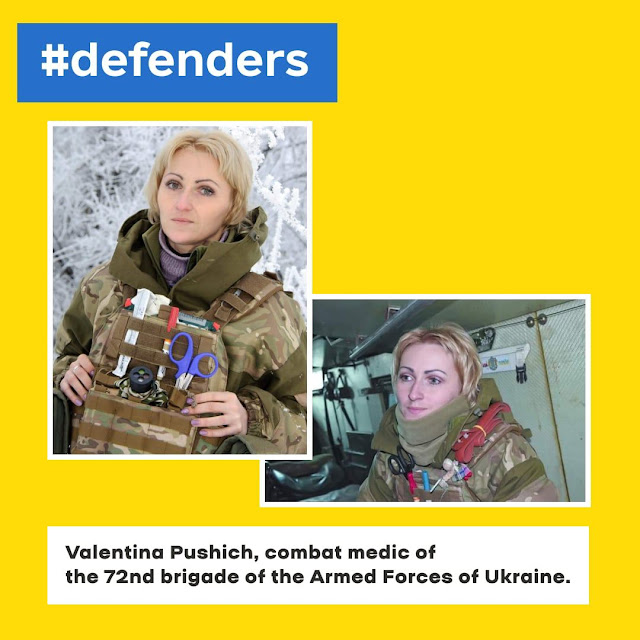
#ladydefenders
Valentyna Pushich, a combat medic of the 72nd Separate Mechanized Brigade of the Armed Forces of Ukraine.
https://emssolutionsint.blogspot.com/2017/03/russian-esmarchs-tourniquet.html
At the end of 2015, she signed a contract and joined the Armed Forces of Ukraine to rescue the wounded in the East. For saving soldiers during the heavy fighting in 2017 in Avdiivka, she was awarded the Order for Courage of 3rd degree.
On February 27, Valentyna Pushich was killed during a massive russian air raid on Brovary. She was on her way to pick up the wounded.
XXXXXXXXXXXXXXXXXXXXXXXXXXXXXXXXXXXXXXXXXXXXXXXXXXX
Se observa el TQ en su Chaleco antibalas a la izquierda
Russian Army Tourniquet Esmarch´s tourniquetTQ
#DrRamonReyesMD
#Esmarch #TQ #Tourniquet
Self-Affixing Tourniquet. Russian Firm Designs First Domestically-Produced Combat Tourniquet
http://emssolutionsint.blogspot.com/2017/03/self-affixing-tourniquet-russian-firm.html
